
Amazon Elastic Compute Cloud
AWS service for renting virtual servers by the second
Amazon Elastic Compute Cloud (EC2) is the virtual-server rental service inside Amazon Web Services, launched in public beta in August 2006 and generally available from October 2008. Users boot machine images into resizable instances and pay for active capacity by the second, choosing where in the world those instances run.
- Public beta opened 25 August 2006; beta label dropped 23 October 2008
- Billing runs by the second while an instance is active
- Nitro hypervisor replaced Xen from the C5 family in November 2017
- Spot capacity can be up to 90% cheaper than on-demand, with two minutes' warning
- Amazon moved its own retail platform onto EC2 and AWS in November 2010
What it is
Amazon Elastic Compute Cloud, usually shortened to EC2, is the virtual-server part of Amazon Web Services. Customers rent virtual computers and run whatever software they want on them. Each virtual machine is called an instance and starts from an Amazon Machine Image, a saved template of an operating system plus applications. Instances can be created, started and stopped on demand, and billing runs by the second while a server is active, which is where the word elastic comes from. Users pick the geographical location of their instances to cut latency and improve redundancy. Instance sizes are measured in Elastic Compute Units, and the range runs from tiny general-purpose machines through compute, memory, storage and accelerated families.
How it came about
Amazon opened a limited public beta in August 2006, handing out access first come, first served. The catalogue grew quickly: new sizes arrived in 2007 and 2008, static addresses, availability zones and user-chosen kernels came in March 2008, and persistent block storage followed that August. The beta label was dropped in October 2008, when Amazon also promised a service level agreement, Windows and SQL Server support, a management console, and load balancing, autoscaling and monitoring. Those arrived in May 2009. Most of the early engineering happened in Cape Town under Chris Pinkham, who set the architecture and built the team with Willem van Biljon. Amazon moved its own retail platform onto EC2 and AWS in November 2010.
The compute
EC2 began on the Xen hypervisor. In November 2017 Amazon introduced the C5 family running on its own Nitro design built around KVM, and later that month added a bare-metal option alongside the virtualized types. The January 2019 line-up spanned general purpose, compute optimized, memory optimized, accelerated computing and storage optimized families. In 2025 the C8gn family arrived on Graviton4 with up to 600 Gbit/s of network bandwidth, roughly 30 percent more compute than C7gn, and G6f instances let customers take one-eighth, one-quarter or one-half of an NVIDIA L4 GPU. Storage choices include temporary instance-store disks and Elastic Block Store volumes of 1 GB to 16 TB, which are replicated, snapshot-able and attachable while instances run. S3 holds objects reachable over HTTP, free of transfer charges within a region.
Where the GPUs are
Instances can be placed in chosen geographical locations so that latency is low and redundancy is high. Amazon groups capacity into availability zones and regions, and customers can spread instances across them. Elastic IP addresses belong to an account rather than a machine, so they can be pointed at any instance programmatically without waiting for DNS updates. The service was largely built by a team in Cape Town, South Africa.
Customers and deals
Amazon itself is a customer: the retail website platform was moved onto EC2 and AWS in November 2010. FreeBSD support came about after Colin Percival, the project's Security Officer, lobbied Amazon from 2006; Amazon backed FreeBSD officially in November 2012 and Percival maintains that platform. Spotinst is named as a company using machine learning to guess when spot capacity will be reclaimed.
Money and ownership
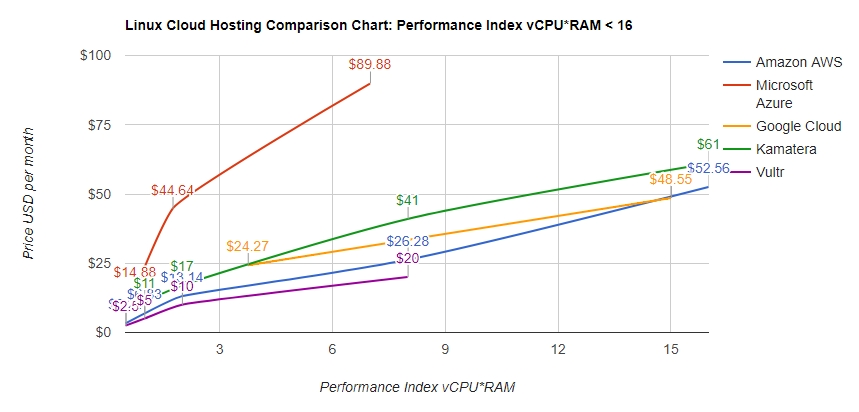
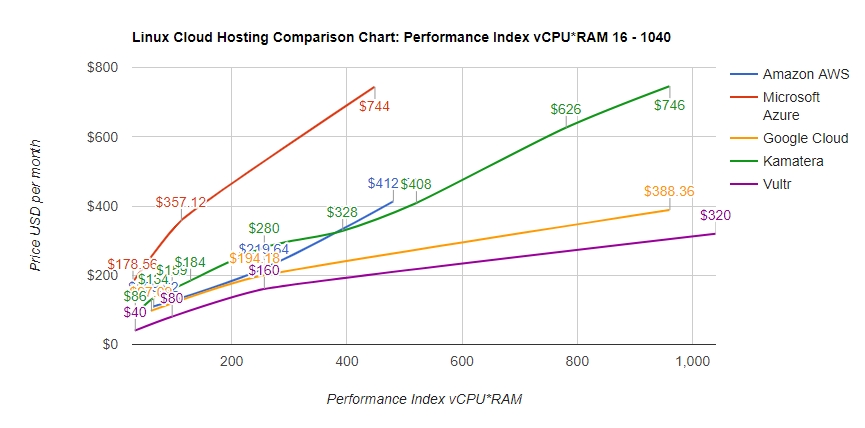
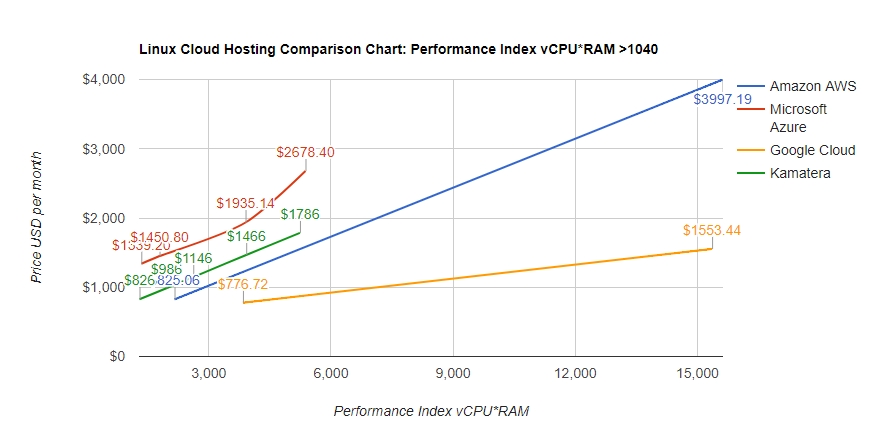
Pricing as of April 2018 put the smallest t2.nano at about $0.0058 per hour, or $4.176 per month, while an i3.16xlarge reached $4.992 per hour. Data transfer ranged from free to $0.12 per gigabyte depending on direction and volume, with inbound traffic free. Reserved instances cut the hourly rate by 35 to 75 percent for one or three year terms, and prepaid plans could go as low as $2.50 per month. Spot capacity sells at up to 90 percent off on-demand prices. Savings Plans, announced in November 2019, let buyers commit to hourly spend in exchange for discounts.
Its place in AI
EC2 is one of the earliest public cloud computing services and helped define the by-the-second rental model for virtual servers. Its instance catalogue became a reference point for sizing virtual machines, and its pricing modes, on-demand, reserved and spot, were widely copied. Amazon's own retail platform running on it from 2010 showed that large-scale commercial workloads could sit on rented capacity.
Questions and criticism
Spot instances carry no service level agreement and can be reclaimed with two minutes of notice. A 2011 study found spot prices were generally not set to clear the market but were shaped by an undisclosed reserve price, and researchers at the Israeli Institute of Technology described prices as drawn from a tight interval around a hidden reserve. Cloud providers hold large amounts of excess capacity that must be sold or written off.

Questions people ask about Amazon Elastic Compute Cloud
What is an EC2 instance?
It is a virtual computer that Amazon rents to you. You start it from an Amazon Machine Image, which is a saved template holding an operating system and any software you want. You can create, launch and stop instances whenever you need them, and you pay only for the time they are running.
Why is it called elastic?
Because capacity can be added and removed quickly and billing follows actual use. Amazon charges by the second for active servers, so the amount of computing power in use can stretch up or down with demand rather than being fixed by a long purchase.
How do the payment options differ?
On-demand charges by the hour with no commitment. Reserved instances lock in a one or three year term for a 35 to 75 percent lower hourly rate, paid all upfront, partly upfront or not upfront. Spot instances use spare capacity at up to 90 percent off but can be interrupted with two minutes of notice.
What storage can an instance use?
A boot disk can be a temporary instance-store volume, which survives a reboot but is lost when the instance stops, or an Elastic Block Store volume. EBS volumes run from 1 GB to 16 TB, are replicated, support snapshots and cloning, and can be attached or detached while instances run.
Which operating systems run on it?
Linux was there from the start, joined by OpenSolaris and Solaris Express, then Windows Server from 2008, NetBSD in 2011, and FreeBSD and Windows Server 2012 in 2012. Amazon also offers its own Amazon Linux AMI, and macOS arrived in November 2020 on Mac Mini hardware.
Good reading and sources
- Official websiteOfficial site
- WikiLeaks website pulled by Amazon after US political pressureThe Guardian, Article
- Amazon’s Trouble Raises Cloud Computing Doubts (Published 2011)The New York Times, Article
- AWS launches bare metal instancesTechCrunch, Article
- AWS follows Google with Reserved Instance flexibility changesPCWorld, Article
- Amazon Elastic Compute Cloud on WikipediaEncyclopedia
- More photos on Wikimedia CommonsPhotos
- Wikidata recordOpen data
The facts on this page come from the Wikipedia article "Amazon Elastic Compute Cloud", written by its contributors and used under the CC BY-SA 4.0 licence, and from its Wikidata record (CC0). EveryNeocloud rewrote the text in its own words, with AI assistance, and compares every page with the article to make sure no passage is copied. It may be reused under the same CC BY-SA 4.0 licence with a link back.
It may contain mistakes, and figures change over time. Nothing here is investment or buying advice. If something is wrong, tell us. Last refreshed 2026-11-14.
Like Amazon Elastic Compute Cloud
All hyperscale clouds 🇺🇸 United States and 2 moreAmazon Web Services
Amazon's on-demand cloud platform, offering compute, storage and AI infrastructure worldwideHyperscaler · Other Nvidia GPUs · 2006
 🇨🇳 China and 4 moreAlibaba Cloud
China's largest cloud provider, running global data centres and the Qwen modelsHyperscaler · Other and custom chips · 2009
🇮🇳 IndiaE2E Networks
India's listed GPU cloud for AI training and inference.Neocloud · Nvidia Hopper · 2009
More from Amazon
All of them 🇺🇸 United StatesCloudflare
Edge network running Nvidia GPUs for AI inference via Workers AIInference platform · Other Nvidia GPUs · 2009