
Barcelona Supercomputing Center
Spanish national supercomputing centre running the MareNostrum machine in Barcelona
A public research institute in Barcelona that runs national-scale computing for Spanish and European science. Founded on 1 April 2005 and governed by a three-way consortium, it houses MareNostrum, a 13.7-petaflop Intel Xeon Platinum system, plus clusters built around newer technologies and, in time, one of Europe's early quantum machines.
- MareNostrum delivers 13.7 petaflops on Intel Xeon Platinum chips
- Opened 1 April 2005 inside a former chapel at UPC
- Ranked 13th on the TOP500 in June 2017, 88th by November 2022
- Around 600 staff and a budget above €34 million in 2018
- Set to host one of Europe's first quantum computers
What it is
The Barcelona Supercomputing Center is a state research centre in Catalonia, best known for operating MareNostrum. That machine delivers 13.7 petaflops and is built around Intel Xeon Platinum processors, with side clusters devoted to emerging technologies. The site sits in the Pedralbes district of Barcelona, inside the Torre Girona chapel on the campus of the Polytechnic University of Catalonia. Its remit covers computer science, life sciences, earth sciences and applied computing, and it also takes part in ELIXIR Spain. A quantum computer, among the first of its kind in Europe, is planned for the same site.
How it came about
Work began on 1 April 2005 under a consortium agreement. The Spanish Ministry of Science and Innovation holds 60 percent, the Government of Catalonia 30 percent and the Polytechnic University of Catalonia 10 percent. Professor Mateo Valero has led the centre as its main administrator. Chemical engineer José María Baldasano set up the Earth Sciences Department and ran it until 2014. Early running costs were set at €5.5 million a year for the 2005 to 2011 period. By 2018 the headcount had reached roughly 600 and the yearly budget exceeded €34 million.
The compute
MareNostrum is the flagship system: 13.7 petaflops of performance on Intel Xeon Platinum silicon. Around it sit smaller clusters dedicated to newer kinds of hardware, so researchers can test technologies that are not yet mainstream. The centre also worked on the IBM cell microprocessor design. On the TOP500 list of the world's fastest machines it stood at 13th in June 2017 and at 88th by November 2022. A quantum computer is expected to join the site, placing it among Europe's earliest.
Where the GPUs are
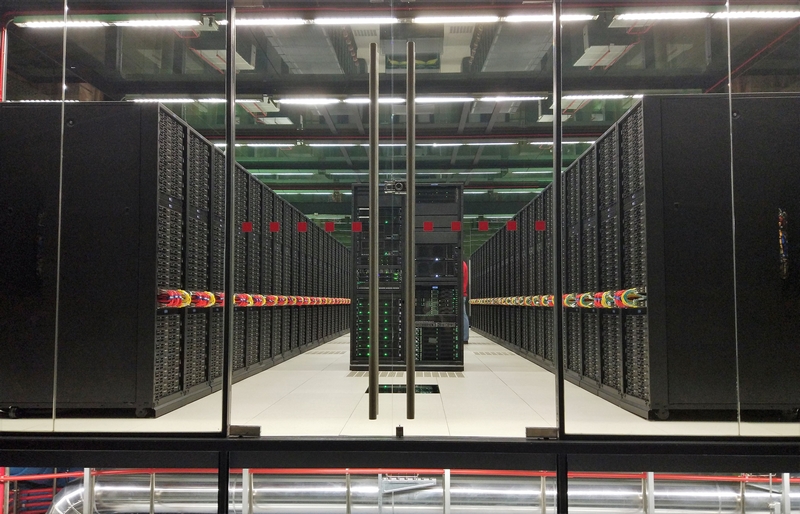
Everything is housed in Torre Girona, a disused chapel on the UPC campus in Barcelona. The main supercomputer sits inside a large glass enclosure within that chapel. The building lies in Pedralbes, in the Capella de la Torre Girona area, and the coordinates given are 41°23′22″N, 2°6′58″E.
Money and ownership
The founding budget was €5.5 million per year, roughly US$7 million, covering 2005 through 2011. Growth was fast. In 2018 the annual global budget passed €34 million and the workforce stood at about 600 people. Funding comes through the consortium of the national science ministry, the Catalan government and the university.
Its place in AI
As Spain's national supercomputing centre, it supports work across several scientific fields. Its Earth Sciences group has modelled air quality, including the CALIOPE project, which predicts pollution levels over the whole of Spain. The centre contributed to the design of IBM's cell microprocessor. It also appears in fiction: Dan Brown's 2017 novel Origin places the E-Wave device in this building.

Questions people ask about Barcelona Supercomputing Center
What is the Barcelona Supercomputing Center?
It is a public research institute in Barcelona, founded on 1 April 2005, that runs Spain's national supercomputing service. Its main machine is MareNostrum, and it also supports work in computer science, life sciences, earth sciences and applied engineering.
Who runs it?
A consortium governs the centre. The Spanish Ministry of Science and Innovation holds 60 percent, the Government of Catalonia 30 percent and the Polytechnic University of Catalonia 10 percent. Professor Mateo Valero is its main administrator.
How powerful is MareNostrum?
The system reaches 13.7 petaflops and uses Intel Xeon Platinum processors. On the TOP500 ranking it placed 13th worldwide in June 2017 and 88th as of November 2022. Smaller clusters around it cover emerging technologies.
Where is the machine kept?
It sits inside a large glass enclosure in Torre Girona, a former chapel on the campus of the Polytechnic University of Catalonia in Barcelona's Pedralbes district.
What research does it support?
Work spans several fields. The Earth Sciences Department, set up by José María Baldasano, has modelled air quality through projects such as CALIOPE, which forecasts pollution across Spain. The centre also contributed to IBM's cell microprocessor design.
Good reading and sources
- Barcelona Supercomputing Center on WikipediaEncyclopedia
- More photos on Wikimedia CommonsPhotos
- Wikidata recordOpen data
The facts on this page come from the Wikipedia article "Barcelona Supercomputing Center", written by its contributors and used under the CC BY-SA 4.0 licence, and from its Wikidata record (CC0). EveryNeocloud rewrote the text in its own words, with AI assistance, and compares every page with the article to make sure no passage is copied. It may be reused under the same CC BY-SA 4.0 licence with a link back.
It may contain mistakes, and figures change over time. Nothing here is investment or buying advice. If something is wrong, tell us. Last refreshed 2026-11-14.
Like Barcelona Supercomputing Center
All research and university clusters 🇦🇺 AustraliaNational Computational Infrastructure
Australia's national high-performance computing and data facility at ANU in CanberraSupercomputer · Other Nvidia GPUs · 2007
 🇺🇸 United StatesTexas Advanced Computing Center
University of Texas centre running supercomputers and storage for U.S. researchResearch cluster · Other Nvidia GPUs · 2001
 🇮🇹 Italy and 1 moreGalileo
Italian national Tier-1 supercomputer for scientific and technical computingSupercomputer · Other Nvidia GPUs · 2015
 🇯🇵 JapanTsubame
A long-running Japanese supercomputer series built for AI and scientific computing.Supercomputer · Nvidia Hopper · 2006
More from Government of Catalonia
All of them 🇪🇸 Spain and 1 moreMareNostrum
Spain's main supercomputer at the Barcelona Supercomputing CenterSupercomputer · Nvidia Hopper · 2005
 🇺🇸 United StatesNCAR-Wyoming Supercomputing Center
A high-performance computing and data archival facility in Cheyenne, Wyoming.Supercomputer · Other Nvidia GPUs · 2003
 🇺🇸 United StatesRoadrunner
IBM-built hybrid supercomputer at Los Alamos, first to sustain a petaflopSupercomputer · Other and custom chips · 2008
🇸🇦 Saudi Arabia and 1 moreShaheen
KAUST's flagship supercomputer series in Saudi ArabiaSupercomputer · Other and custom chips · 2009